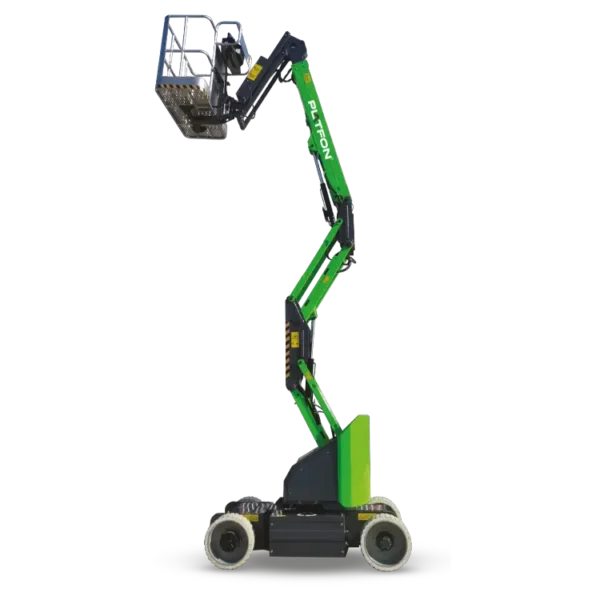
PB12 Articulating Boom Lift
- 11.5mMax. working height
- 9.5mMax. platform height
- 200kgLifting capacity
- 4,800kgMachine weight
If a boom stops at height or the operator cannot control it, someone on the ground must bring the platform down safely. This guide explains boom lift emergency lowering, a generic rescue sequence and the training behind it.
| Model | Max. working height (m) | Max. platform height (m) | Lifting capacity (kg) | Machine weight (kg) | Max. persons |
|---|---|---|---|---|---|
| PB12 Articulating Boom Lift | 11.5 | 9.5 | 200 | 4,800 | 1 |
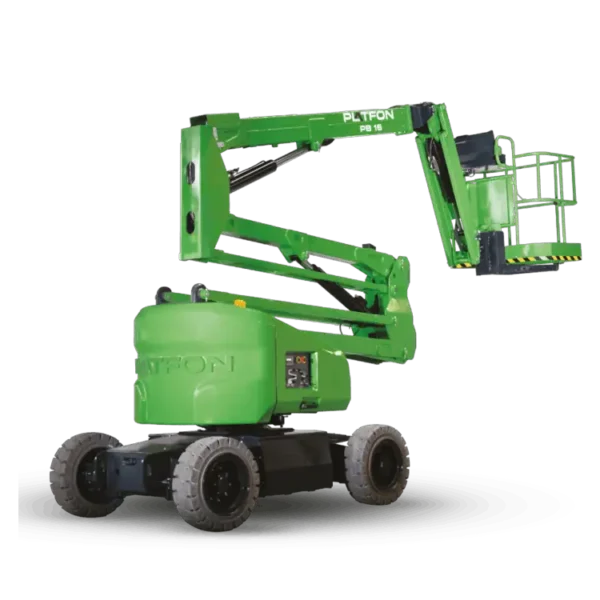
| PB16 Articulating Boom Lift | 16 | 14 | 230 | 7,200 | 2 |
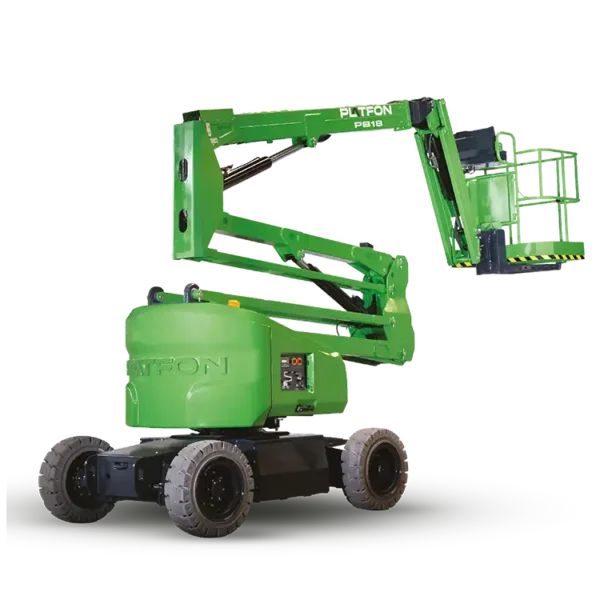
| PB18 Articulating Boom Lift | 17.7 | 15.7 | 230 | 8,000 | 2 |
Emergency lowering is a secondary means of bringing a work platform down when the normal controls cannot be used. On a scissor machine this is usually simple: open a valve and the deck descends vertically. On a boom, the platform may be several meters out from the chassis and above obstacles, so lowering it safely means folding and lowering boom sections in a controlled order.
Typical triggers are a loss of main power, a flat battery, a hydraulic or control fault, an operator who is ill or injured, and entrapment of the operator against a structure. In each case the people on the ground need a plan they have practiced, not one they work out under pressure.
This guide is general information. The operator's manual for the machine, your employer's rescue plan and local rules always take precedence.
The red emergency stop buttons at the platform and ground controls cut power to the machine's functions. They stop movement; they do not bring the platform down. The lowering system is separate, typically operated from the ground control station or the chassis, and on many machines from the platform as well.
Emergency lowering is a backup system for bringing a boom's platform down when the normal controls cannot be used, for example after a power failure, a control fault or if the operator becomes incapacitated. Depending on the machine, it uses an auxiliary power unit, manual lowering valves or both, operated by a trained person, usually from the ground. The exact procedure is in the operator's manual.
Only people who have been trained and familiarized on that machine's emergency procedure and are named in the rescue plan. That usually means the operator and at least one ground person who stays on site while the platform is raised. Untrained bystanders should not operate the controls, and emergency services may not know the specific machine, so the plan should not rely on them alone.
The method varies by model, so follow the manual exactly. On many electric articulating booms, manual lowering valves on the hydraulic system let the boom sections descend under gravity, one function at a time; other machines use a hand pump or an auxiliary pump. The ground person must watch the platform throughout, because folding a boom can swing the platform toward structures or people.
Emergency stop cuts power to the machine's functions so that all movement stops; it does not lower the platform. The emergency descent system is separate and brings the platform down when normal control is not available. Both should be located and tested during familiarization. On most machines the emergency stop must be reset before normal or auxiliary functions will work.
On many booms, yes: an auxiliary power switch at the platform controls lets the operator lower the boom slowly after a main power failure. If the operator is injured, trapped or unresponsive, the ground person takes over from the ground controls. Check which options your machine has, because they differ between models and manufacturers.
The PB18 articulating boom lift and the PSP18 tracked boom lift list emergency lowering among their safety features. For the PB12 and PB16, the listed items are emergency stop, overload protection, a motion alarm, a foot pedal and drive at full height. For any model, ask for the operator's manual with your quote and confirm how its backup lowering works before the machine goes to work.
Once the platform is down and the operator is safe, take the machine out of service. Tag it, isolate it, report the incident to the supervisor and do not use it again until a competent person has found and fixed the cause. Then review the rescue plan: what worked, what was slow and what training needs updating.
At least whenever a new machine or a new crew arrives on site, and whenever the rescue plan changes. Many employers also include it in periodic refresher training. A short drill at ground level, locating the controls and walking through the sequence, takes minutes and makes a real rescue faster and calmer. Follow the manual's instructions on testing the auxiliary system.
Stay calm and talk to the operator if you can. Find out what has happened: power loss, a fault, a medical problem or entrapment. If the operator is conscious and the platform controls still work, the simplest solution is often for the operator to lower the platform normally.
If someone is injured or trapped, call the emergency services as the rescue plan requires and start the planned recovery when it is safe to do so.
Go to the ground control station, switch to ground control with the key or selector and check that the emergency stop buttons are reset. If the machine still has power, use the normal ground controls to bring the platform down.
Lower the boom in the order the manual gives. On an articulating machine such as the PB16 Articulating Boom Lift, that order matters, because each section moves the platform through a different arc. The articulating boom lifts page explains how these machines are built.
If normal ground control does not work, switch to the auxiliary power function or the manual lowering valves as the manual describes. Auxiliary pumps often have short duty cycles, so use them in short bursts and avoid unnecessary movements.
Manual valves let sections descend under gravity. Open them carefully, one at a time, and close each one as soon as its movement is complete, so that descent stays slow and predictable.
As the boom folds and lowers, the platform does not always move straight down. If a second person is available, have them watch the platform and keep everyone else out of the area beneath. Stop and reassess if the platform approaches a structure, a power line or a tree.
On a tracked spider-type machine, the stabilizers must stay deployed until the boom is fully stowed. Our tracked boom lift page covers that set-up in more detail.
If the operator is pinned against a structure, lowering may increase the pressure. The rescue plan should identify in advance how to reverse the last movement safely. Do not improvise with machine functions you have not been trained on.
Once the operator is free and down, give first aid if you are trained to, take the machine out of service and report the incident.
Rescue procedures belong in operator training and model familiarization, and ground crews need it as much as operators do. The PB18 Articulating Boom Lift and the PSP18 Tracked Boom Lift list emergency lowering among their safety features, while the PB12 Articulating Boom Lift and PB16 list emergency stop and overload protection.
For daily routines on scissor machines, see our guide to operating a scissor lift. Single-person work raises its own rescue questions, covered in the one-man lift guide.
When you request a quote for a PB or PSP18 machine, ask for the operator's manual and its rescue and lowering procedure, so your team can plan training early.