AT5.5 Scissor Lift
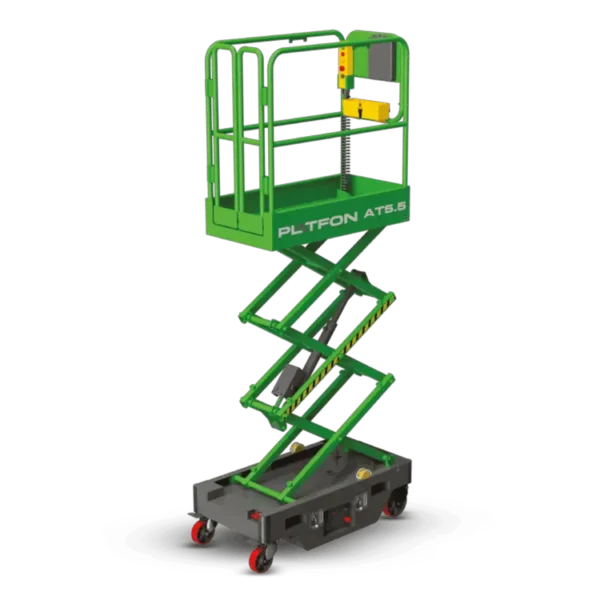
- 5.4mMax. working height
- 3.4mMax. platform height
- 250kgLifting capacity
- 400kgMachine weight
This guide walks through operating a scissor lift from the pre-use check to parking at the end of the shift: site hazards, load and wind limits, what not to do and how emergency lowering works. The machine's own manual always takes precedence.
| Model | Max. working height (m) | Max. platform height (m) | Lifting capacity (kg) | Machine weight (kg) | Max. persons |
|---|---|---|---|---|---|
| AT5.5 Scissor Lift | 5.4 | 3.4 | 250 | 400 | 1 |
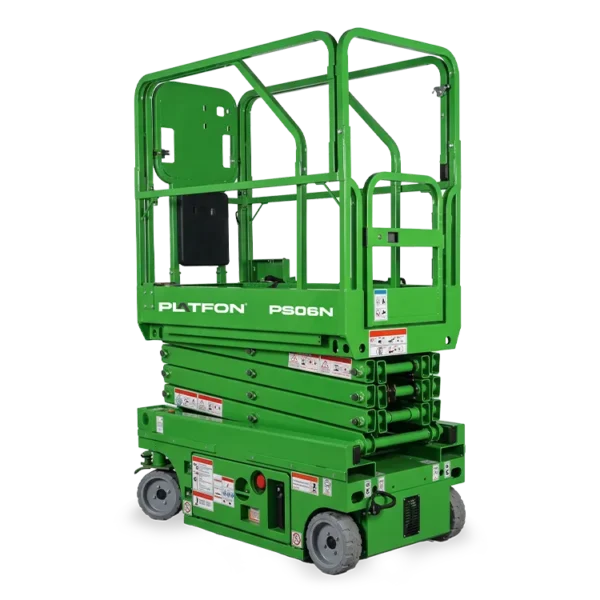
| PS06N Scissor Lift | 7.8 | 5.8 | 230 | – | 2/1 |
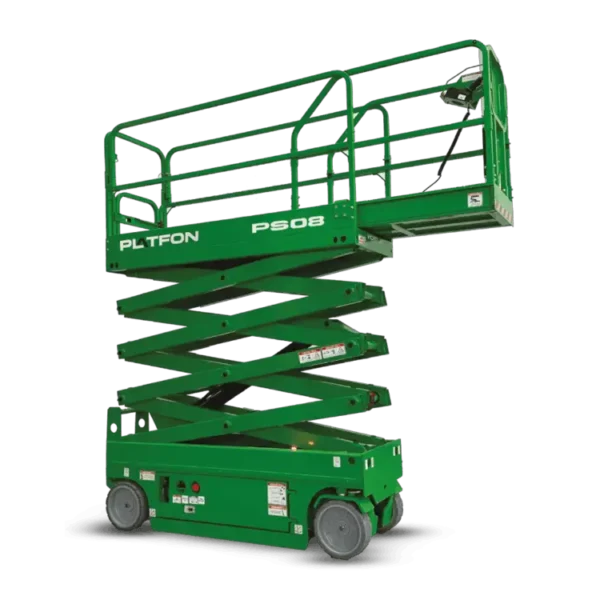
| PS-08 Scissor Lift | 7.8 | 5.8 | 230 | 1,500 | 2/1 |
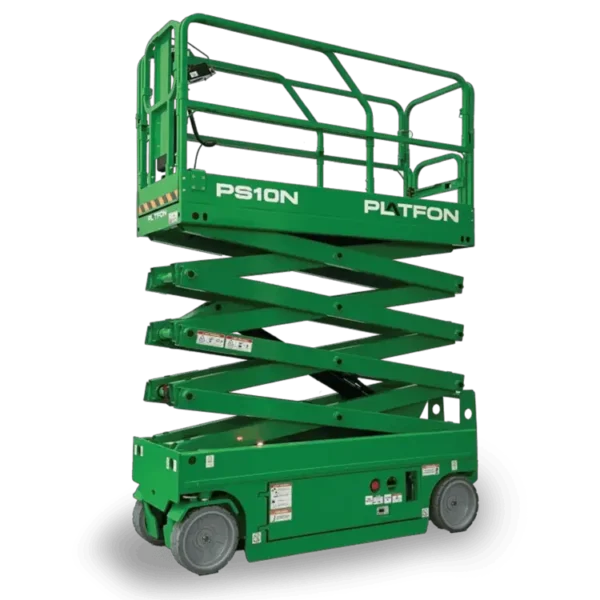
| PS-10N Scissor Lift | 9.8 | 7.8 | 230 | 2,150 | 2/1 |
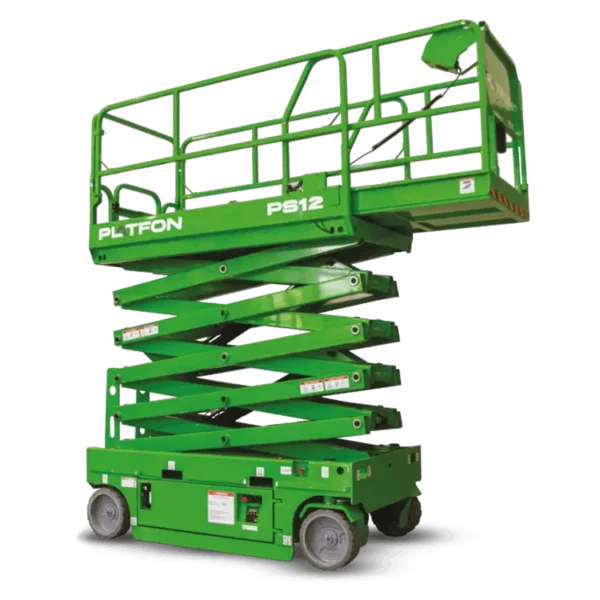
| PS-12 Scissor Lift | 11.8 | 9.8 | 320 | 2,580 | 2/1 |
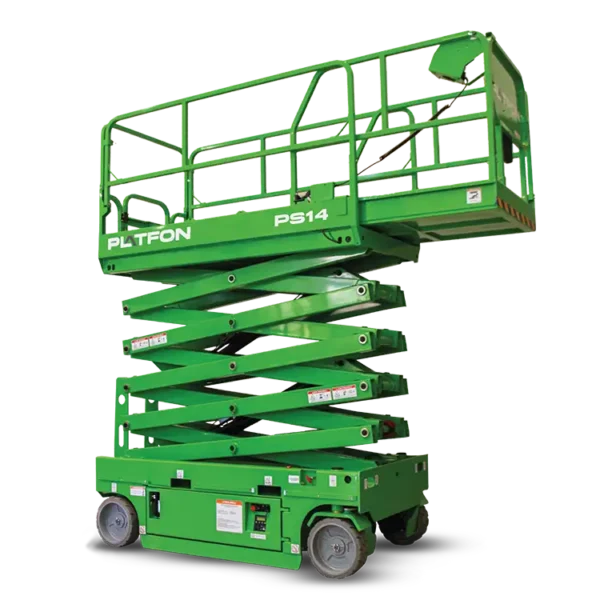
| PS-14 Scissor Lift | 13.8 | 11.8 | 320 | 2,950 | 2/1 |
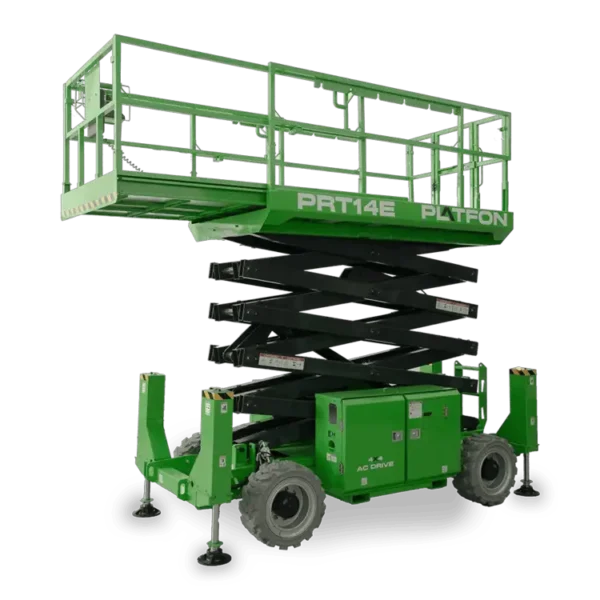
| PRT14E Scissor Lift | 14.2 | 12.2 | 365 | 5,580 | 2 |
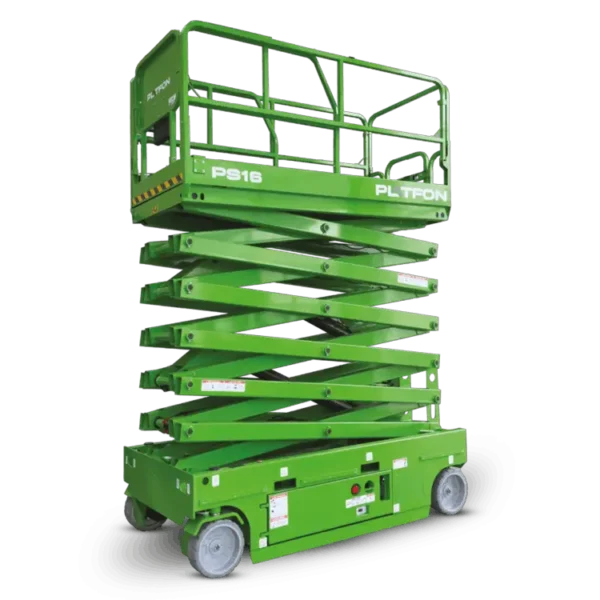
| PS-16 Scissor Lift | 15.8 | 13.8 | 230 | 3,540 | 2/1 |
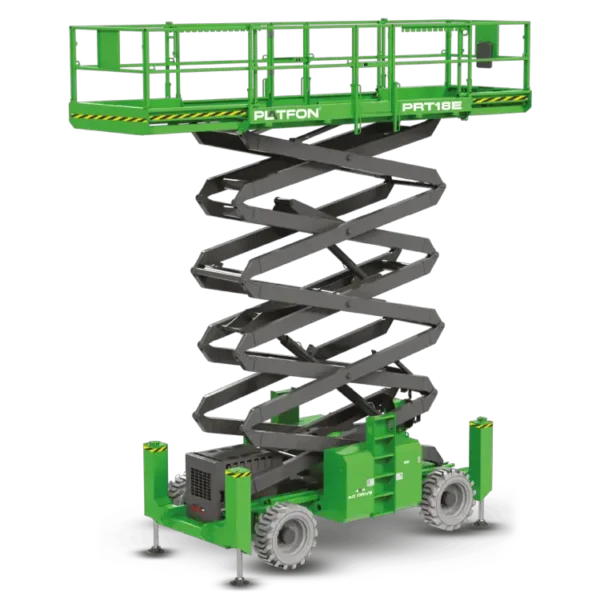
| PRT18E Scissor Lift | 17.95 | 15.95 | 680 | 8,000 | 4 |
Only trained, authorized people should operate a scissor machine. In practice that means three layers: recognized training for the machine category, such as an IPAF PAL card or an equivalent program in your country; familiarization on the specific make and model; and authorization from the employer who controls the work.
Familiarization matters because controls, alarms and emergency systems differ between machines. Before first use, the operator should locate the platform and ground controls, the emergency stop buttons, the emergency lowering device and the tilt alarm, check that the manual is in its holder and read the decals on the machine.
This page gives general safety guidance only. The operator's manual for your machine, your employer's procedures and the regulations where you work always take precedence over it.
Every shift starts with a visual walk-around and a function test, normally carried out from the ground controls first. Look for damage, leaks, loose or missing parts and anything that has changed since the last use. If you find a defect, tag the machine out of service and report it; do not use it until a competent person has repaired and cleared it.
Start with training and familiarization on the specific model, then complete a pre-use inspection and function test. Check the site for slopes, holes, overhead hazards and wind before raising the platform. Close the entry gate or bar, keep both feet on the platform floor, stay within the rated load and drive elevated only where the manual allows. Always follow the machine's manual and your employer's rules.
There is rarely a government license as such, but employers are generally required to make sure operators are trained and competent. In the UK, Ireland and the Gulf, the IPAF PAL card is widely accepted as proof of training; in North America, employers provide or arrange operator training under the applicable national requirements. Familiarization on the specific machine and authorization from the employer are needed as well.
It depends on the manufacturer's instructions, local rules and the site. On scissor lifts the guardrails are the primary fall protection, and many authorities do not require a harness when they are in place. Some employers and sites require one anyway. If a harness is required, attach the lanyard only to anchor points designated by the manufacturer, never to a guardrail.
Many scissor lifts can drive with the platform raised, at an automatically reduced speed, but only on firm, level ground within the limits in the manual. Look in the direction of travel, watch for overhead obstructions and keep clear of holes, edges and slopes. Some machines restrict drive above a certain height. Lower the platform before traveling on a slope or over uneven ground.
The limit is shown on the machine's data plate. Indoor-only scissor lifts are rated for zero wind and must not be raised outdoors. Outdoor-rated machines commonly carry a maximum of 12.5 m/s (28 mph), but check the exact figure. Gusts, wind funnelling between buildings and sheets or panels on the platform all increase the risk, so stop work before the limit is reached.
Most scissor lifts have a manual lowering valve, often a pull knob or handle on the chassis, that lets the platform descend under its own weight if power or controls fail. Some models also offer an emergency lowering function at the platform. Location and procedure differ between machines, so every operator and ground person should learn them during familiarization. After an emergency descent, take the machine out of service until it has been checked.
Never climb or stand on the guardrails, use ladders, boxes or planks on the platform to gain height, or exceed the rated load. Do not override tilt alarms or other safety devices, use the machine as a crane, tie it to a structure, raise it on soft or sloping ground, or work with the gate open. Never use a machine that has failed its pre-use check.
Drive or move the stowed machine to the work area along a route you have checked. Position it so that the work is within comfortable reach from the platform, with the guardrails between you and any edge. Leaning out over the rails or pushing against the structure can destabilize the platform.
Cordon off the area beneath and around the machine, especially where other people or vehicles move. On Platfon PS models the automatic pothole protection adds a defense against drop-offs, but barriers and planning come first.
Enter the platform, close the gate or safety bar, and check that the controls respond correctly at low height before going up. Raise the platform smoothly while watching overhead. At height, keep both feet on the platform floor and secure tools so that nothing can fall.
If the manual allows driving elevated, move slowly and look in the direction of travel. Lower before crossing slopes, ramps, thresholds or uneven ground. Where the machine has an extension deck, check its separate rated load and lock it in place before use.
Rated loads on Platfon electric scissors range from 230 kg (507 lb) on models such as the PS-10N and PS-16, to 320 kg (705 lb) on the PS-12 Scissor Lift and PS-14, and 680 kg (1,499 lb) on the four-wheel-drive PRT18E Scissor Lift. Those figures include everyone on the platform.
Heavy items such as plasterboard, glass or pipe sections add up quickly. Weigh them, spread them evenly and keep them inside the guardrails. If the overload protection triggers, remove load rather than trying to work around it.
Scissor lifts have emergency stop buttons at both the platform and the ground control position. Pressing one cuts powered functions; it does not lower the platform.
To bring the platform down when the operator cannot, a trained ground person uses the ground controls or the emergency lowering device described in the manual. On booms the procedure is more involved, as our guide to boom lift emergency lowering explains.
At the end of the shift, lower the platform fully, park on a firm, level surface away from traffic and remove the key to prevent unauthorized use. Charge electric machines in a ventilated area following the manual, and keep cables and the charger in good condition.
Report any defect, fault code or near miss before the next user takes over. A short written handover note saves the next operator from discovering a problem at height. More on battery machines is on our electric scissor lifts page.
Many incidents start with the wrong machine: an indoor slab scissor taken outside in wind, or a platform too small for the load. Indoor work on finished floors suits compact electric models such as the AT5.5 Scissor Lift and the rest of our mini scissor lift range.
Larger decks and loads point to the PS-12, PS-14 and PS-16; uneven outdoor ground calls for four-wheel-drive models. The full scissor lift range lists every model with its height and capacity.
Describe the work, the floor or ground and the loads involved, and we will propose a scissor model matched to those conditions, with a quote.