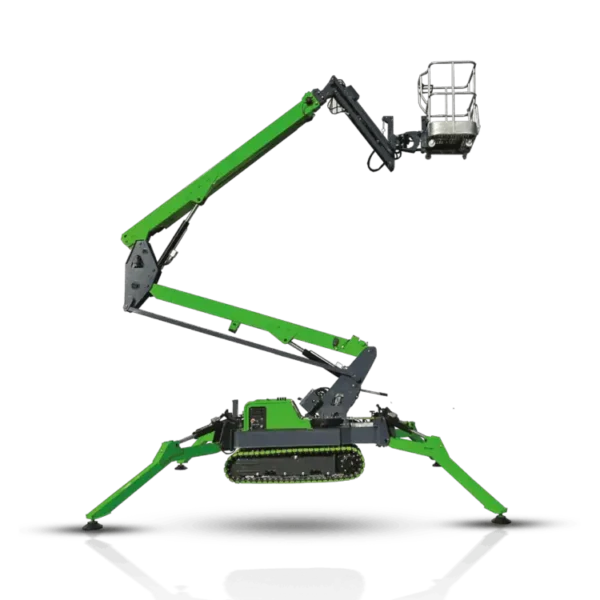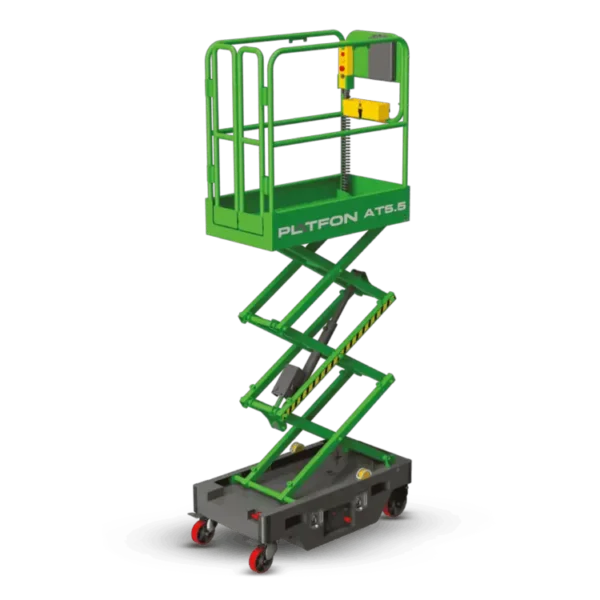
AT5.5 Scissor Lift
- 5.4mMax. working height
- 3.4mMax. platform height
- 250kgLifting capacity
- 400kgMachine weight
Platfon manufactures and sells aerial work platforms; it does not rent them. This guide compares renting and buying a scissor lift neutrally, so you can judge which option suits your workload, budget and in-house resources.
| Model | Max. working height (m) | Max. platform height (m) | Lifting capacity (kg) | Machine weight (kg) | Max. persons |
|---|---|---|---|---|---|
| AT5.5 Scissor Lift | 5.4 | 3.4 | 250 | 400 | 1 |
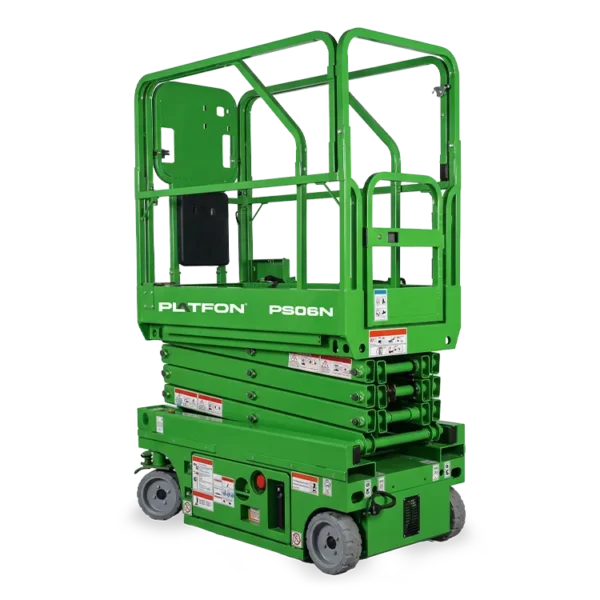
| PS06N Scissor Lift | 7.8 | 5.8 | 230 | – | 2/1 |
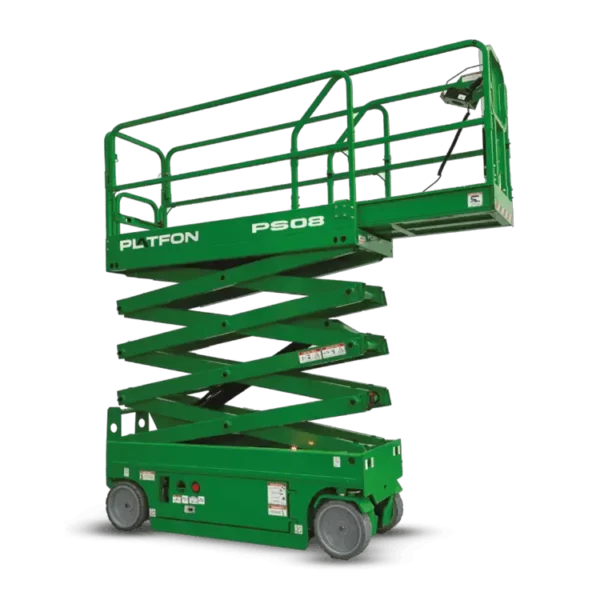
| PS-08 Scissor Lift | 7.8 | 5.8 | 230 | 1,500 | 2/1 |
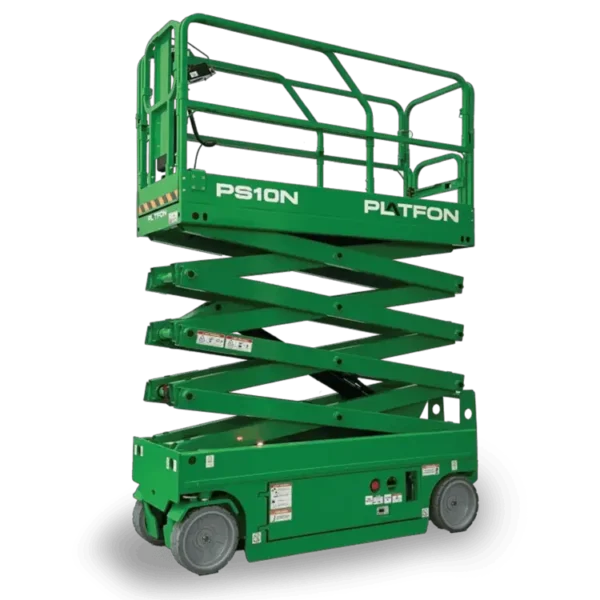
| PS-10N Scissor Lift | 9.8 | 7.8 | 230 | 2,150 | 2/1 |
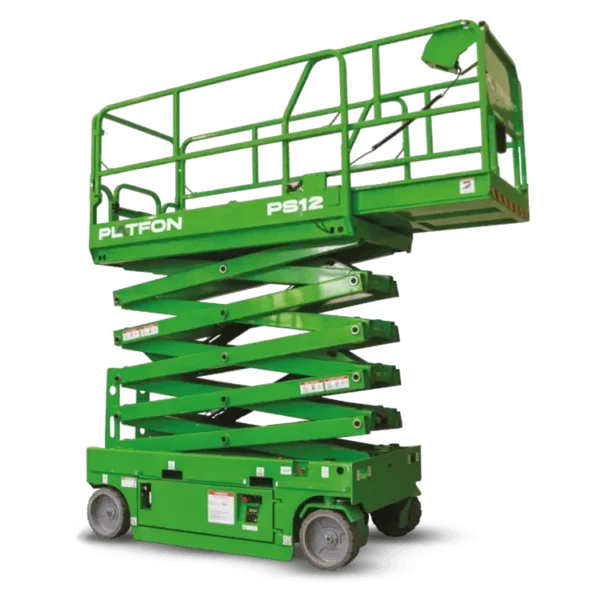
| PS-12 Scissor Lift | 11.8 | 9.8 | 320 | 2,580 | 2/1 |
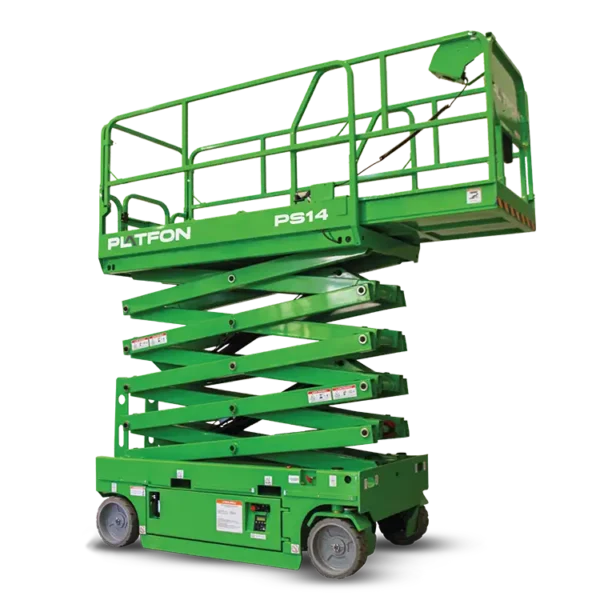
| PS-14 Scissor Lift | 13.8 | 11.8 | 320 | 2,950 | 2/1 |
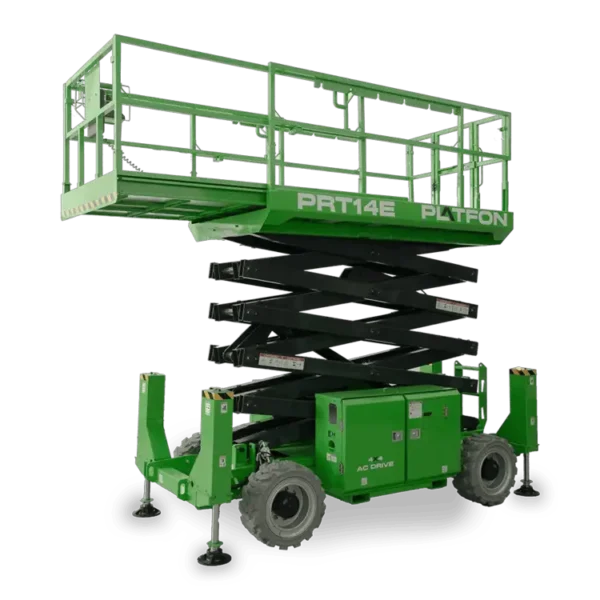
| PRT14E Scissor Lift | 14.2 | 12.2 | 365 | 5,580 | 2 |
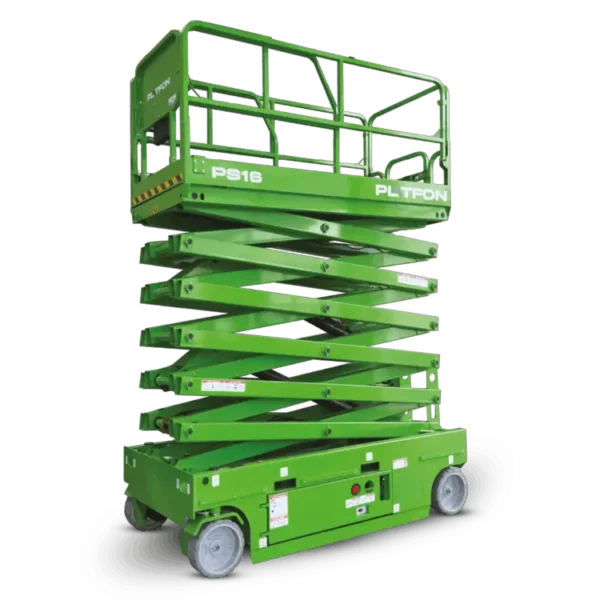
| PS-16 Scissor Lift | 15.8 | 13.8 | 230 | 3,540 | 2/1 |
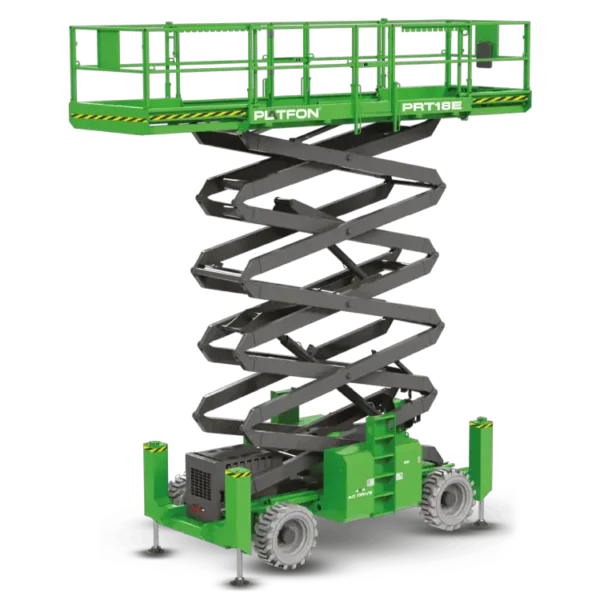
| PRT18E Scissor Lift | 17.95 | 15.95 | 680 | 8,000 | 4 |
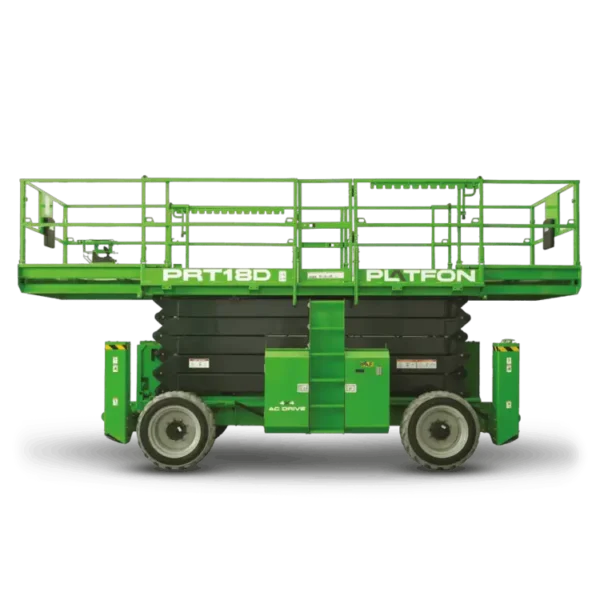
| PRT18D Diesel Scissor Lift | 17.95 | 15.95 | 680 | 8,000 | 4 |
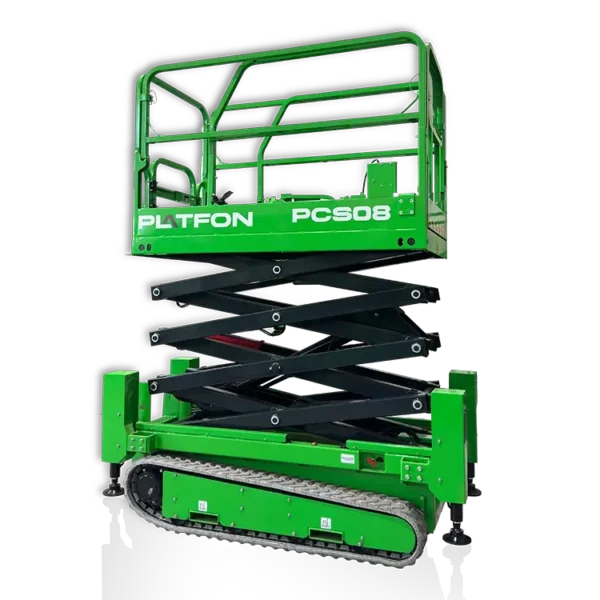
| PCS08 Tracked Scissor Lift | 8 | 6 | 230 | – | 2 |
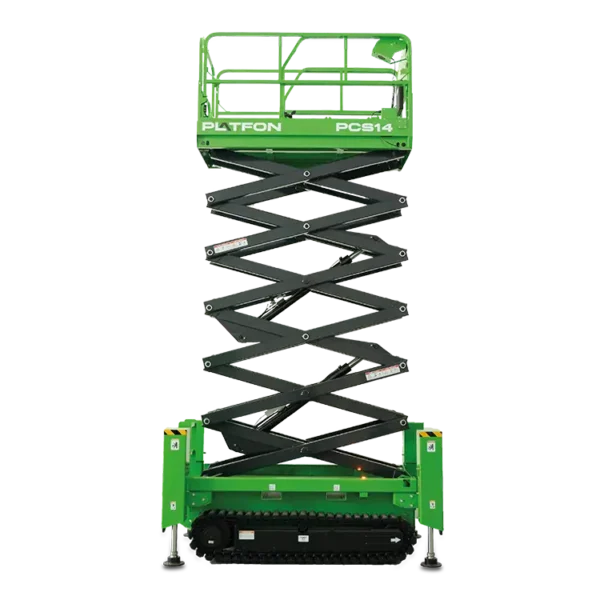
| PCS14 Tracked Scissor Lift | 13.8 | 11.8 | 318 | 3,380 | 2 |
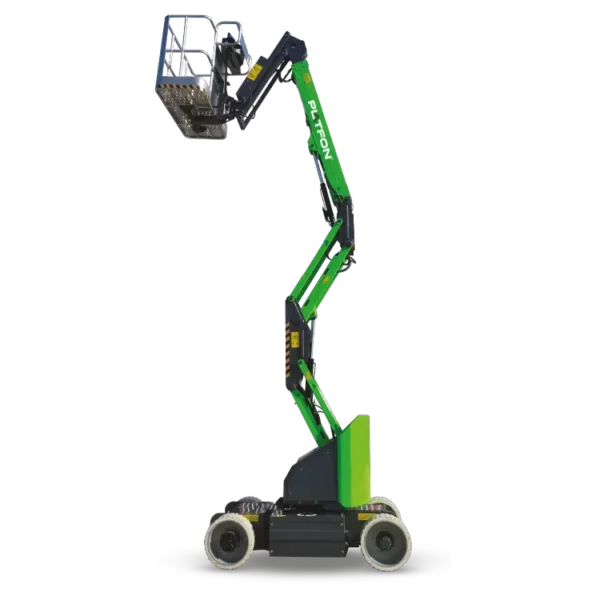
| PB12 Articulating Boom Lift | 11.5 | 9.5 | 200 | 4,800 | 1 |
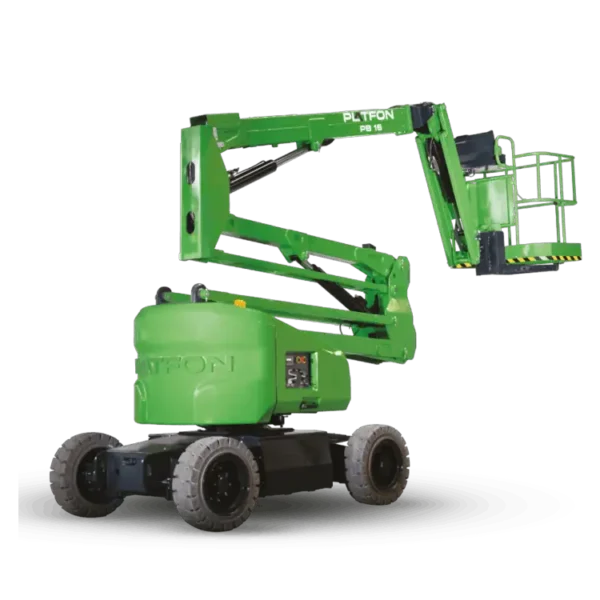
| PB16 Articulating Boom Lift | 16 | 14 | 230 | 7,200 | 2 |
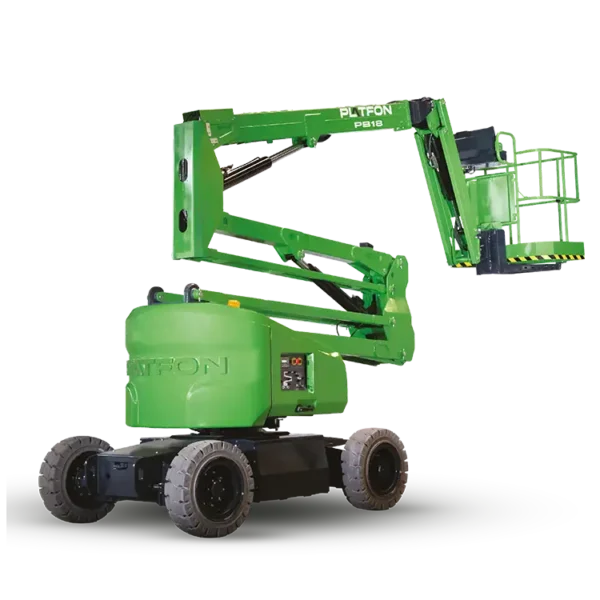
| PB18 Articulating Boom Lift | 17.7 | 15.7 | 230 | 8,000 | 2 |
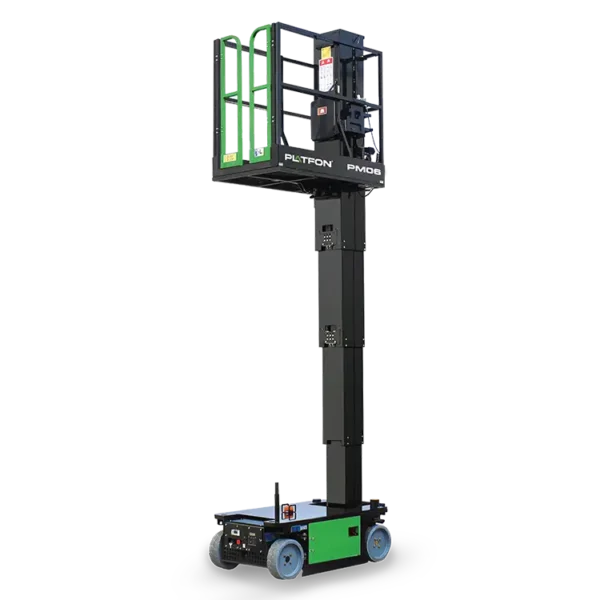
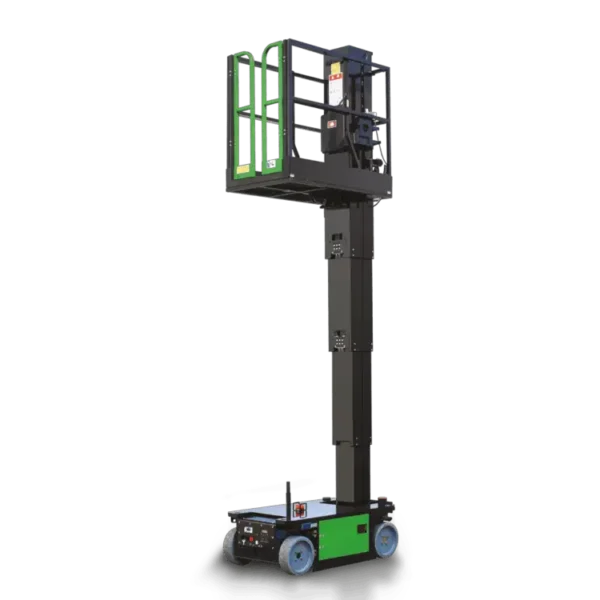
| PM-06 Vertical Mast Lift | 6.8 | 4.8 | 227 | 980 | 1 |
| PM-08 Vertical Mast Lift | 8 | 6 | 160 | 1,060 | 1 |
| PM-10J Vertical Mast Lift | 11.2 | 9.2 | 200 | 2,950 | 2 |
| PSP18 Tracked Boom Lift | 17.7 | 15.7 | 200 | 2,460 | 2 |
Start with utilization. List the jobs of the past one or two years that needed access equipment, note the height and the number of days, then look at the work you have already secured. A machine that would sit in the yard for most of the year is a candidate for renting; one you would hire again and again is a candidate for buying.
Then compare like with like. Annual rental cost should include delivery and collection charges, damage waivers or insurance, and the hours your team loses waiting for machines. Annual ownership cost covers depreciation or financing, insurance, inspections, maintenance, batteries and tires, storage and your own transport. Where the second figure is lower over the planned service life, buying is usually the better business decision.
Availability is the factor that spreadsheets tend to miss. An owned machine is on site when the job needs it, and your operators know it well. Renting, on the other hand, lets you choose a different height or machine type for each job without carrying them all in your own fleet.
Renting makes sense for one-off projects, short peaks in demand, heights you rarely need and periods when your future workload is uncertain. It also suits companies with no space to store machines, no workshop and nobody to manage inspections and records, because the rental company carries the depreciation risk and the paperwork.
Buying, by contrast, tends to pay off in these situations:
No. Platfon Makine is a manufacturer: it builds and sells aerial work platforms and does not run a rental fleet. If you only need a machine for a short job, a local rental company is the right contact. If you plan to buy, or you are a rental company expanding your fleet, you can request a quote from Platfon directly.
Over a short period, renting is almost always cheaper. Over several years of steady use, buying usually costs less, because ownership costs are largely fixed while rental charges keep running for as long as you need the machine. The crossover point depends on utilization, financing, inspection and maintenance costs and resale value, so calculate it with your own figures rather than a rule of thumb.
First estimate the annual rental spend for the jobs you expect, including transport fees and insurance. Then estimate the annual cost of owning: purchase price minus expected resale value, spread over the years you will keep the machine, plus financing, insurance, inspections, servicing and storage. If owning costs less and you can manage the duties that come with it, buying pays off. Our price guide lists the cost items in detail.
That depends on the country. In the UK, LOLER requires a thorough examination of lifting equipment used to lift people at least every six months. In the US, the ANSI A92 standards call for frequent inspections and an annual inspection by a qualified person. Everywhere, operators should carry out a pre-use check before each shift, and the owner keeps the records.
As the employer, you are responsible for making sure operators are trained for the machine category and familiarized with the specific model before they use it. Many companies send operators to an accredited training provider, such as an IPAF-approved training center in the UK and Europe, then carry out model familiarization on site using the operator manual.
Yes. Rental and fleet companies can request quotes for single units or for a mix of models and heights, which helps plan one delivery and a common spare-parts stock. Businesses that want to sell Platfon machines in their own market can apply through the dealer and distributor form on the website.
Resale value depends on operating hours, condition, documented inspections and servicing, and the availability of parts and support for the model. A machine that has been inspected on schedule, stored under cover and repaired properly is easier to sell. Keep every inspection report and service invoice, because buyers of used access equipment will ask for them.
As an owner you become responsible for the inspection regime of each machine: daily pre-use checks by the operator, plus frequent inspections and periodic thorough examinations by a competent person, as your national rules require.
Keep a logbook per machine with dates, findings and repairs. Good records protect you in an audit or after an incident, and they support the resale price later.
Most scissor lift maintenance is routine: hydraulic oil and filters, pins and bushings, tires, controls and the safety functions such as emergency lowering, tilt protection and overload protection. Battery-powered machines also need disciplined charging, as described on the electric scissor lifts page.
The company states that its support team can be reached around the clock, so ask it for a recommended spare-parts list together with your quote.
Owned machines need a dry, secure place to park and charge, and a way to move between sites. Check that your truck or trailer can carry the weight: the PS-10N Scissor Lift weighs 2,150 kg (4,740 lb), the PCS14 Tracked Scissor Lift 3,380 kg (7,452 lb) and the PRT18D Diesel Scissor Lift 8,000 kg (17,637 lb).
Add machinery insurance and any transport permits to the ownership cost, and agree who on your team is responsible for loading and securing the machine.
Buy the height class you use most and rent for the exceptions. For many indoor contractors that is an electric slab scissor of around 10 to 12 m (33 to 39 ft) working height, such as the PS-12 Scissor Lift with 11.8 m (38.7 ft) and 320 kg (705 lb).
For low-level maintenance in finished buildings, a compact machine from the mini scissor lifts range often earns its keep quickly. Outdoor contractors may need a 4WD rough-terrain model instead; the full scissor lift range shows all heights.
If you run a rental fleet, Platfon is a potential supplier, not a competitor. You can request quotes for mixed fleets across the scissor, boom, mast and tracked families, with one point of contact for documents and spare parts.
Companies that want to sell Platfon machines in their own market can apply through the dealer and distributor form. The overview of aerial work platforms is a good starting point for planning a fleet mix.
Send the heights, quantities and site conditions you have in mind. Platfon will prepare a quote for single machines or a complete fleet.